Beyond Lisbon: Smaller Portuguese Towns Travelers Are Falling in Love With
Over the last decade, Lisbon became one of Europe’s most visited cities. And for good reason – beautiful architecture, great food, and an international atmosphere that made thousands of people fall in love with Portugal.
But as Lisbon grew more popular, many travelers started looking for something different. Not necessarily better, just slower, quieter, and more connected to everyday local life.
Instead of crowded neighborhoods and tourist bubbles, more people are now searching for smaller Portuguese towns where life still follows a more natural rhythm. Places where cafés are filled with locals, where beaches feel part of daily life rather than a tourist backdrop, and where it’s still possible to experience Portugal without constantly feeling surrounded by tourism.
Here are five smaller Portuguese towns that travelers are increasingly falling in love with.
Arouca
Most people pass through the area without realizing what surrounds it.
Located about an hour south of Porto, Arouca sits at the heart of a UNESCO-recognized Geopark, a protected area of 328 square kilometers surrounded by mountains, river gorges, waterfalls, and geological formations that feel genuinely remote even though the city is close by.
The town itself is calm and unpretentious. A historic monastery sits at its center, traditional sweets are worth trying, and the pace of daily life feels entirely disconnected from urban energy. But it’s the surrounding nature that makes Arouca truly special.
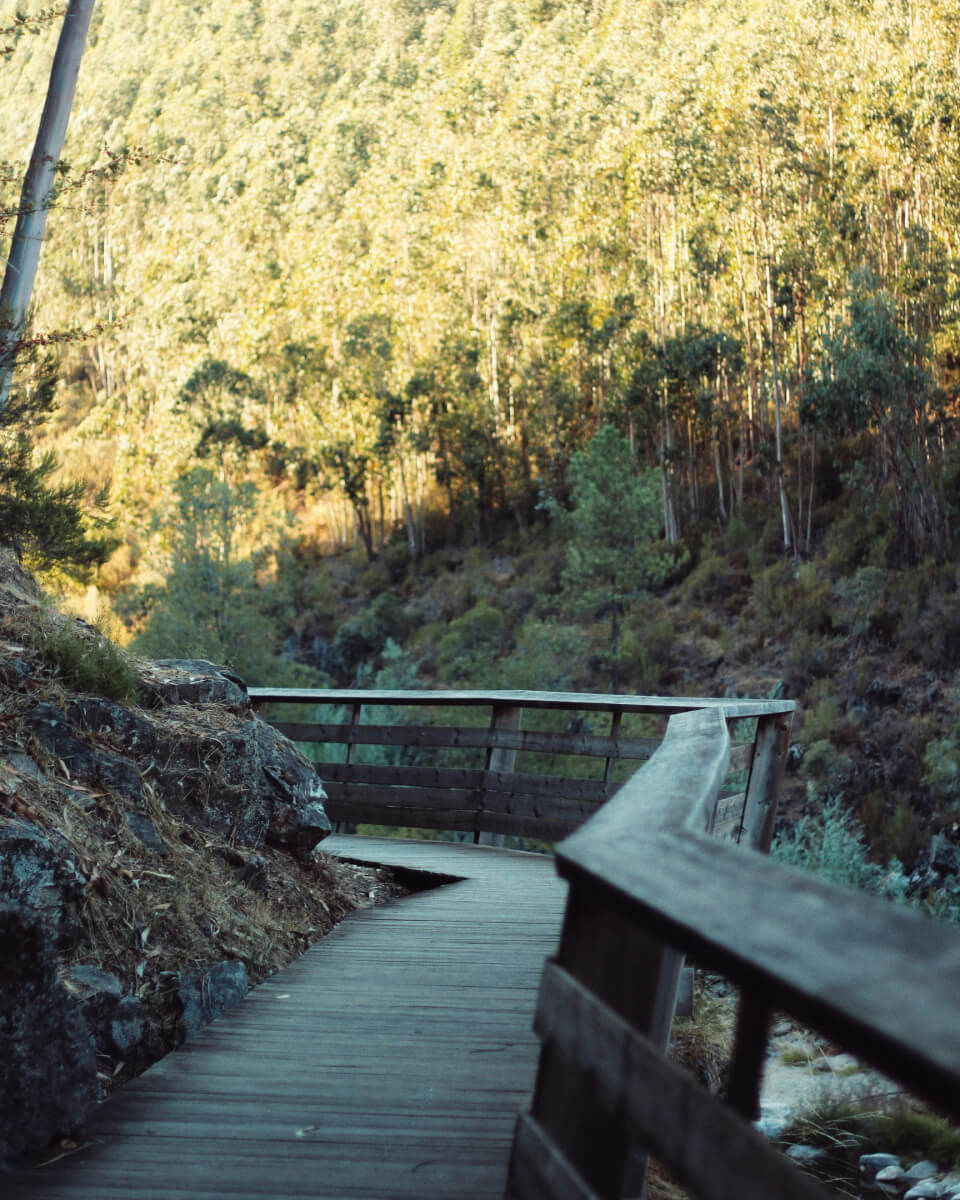
The Paiva Walkways stretch 8 kilometers along the wild Paiva River, through forests and river beaches, in an environment that feels almost entirely untouched. And the 516 Arouca Bridge, the longest pedestrian suspension bridge in the world, crosses the same river valley at 175 meters above the ground, offering views over gorges, waterfalls, and dense forest that are genuinely difficult to forget.
For travelers who want something off the main tourist route, with adventure and nature in equal measure, Arouca is one of Northern Portugal’s best kept secrets.
Don’t miss:
- The 516 Arouca Bridge
- The Paiva Walkways
- Frecha da Mizarela waterfall
- The Arouca Monastery and traditional sweets in town
Esmoriz
While many travelers stay directly in Porto, smaller coastal towns nearby are becoming increasingly attractive for people looking to slow down and spend more time near the ocean.
Esmoriz is one of those places.
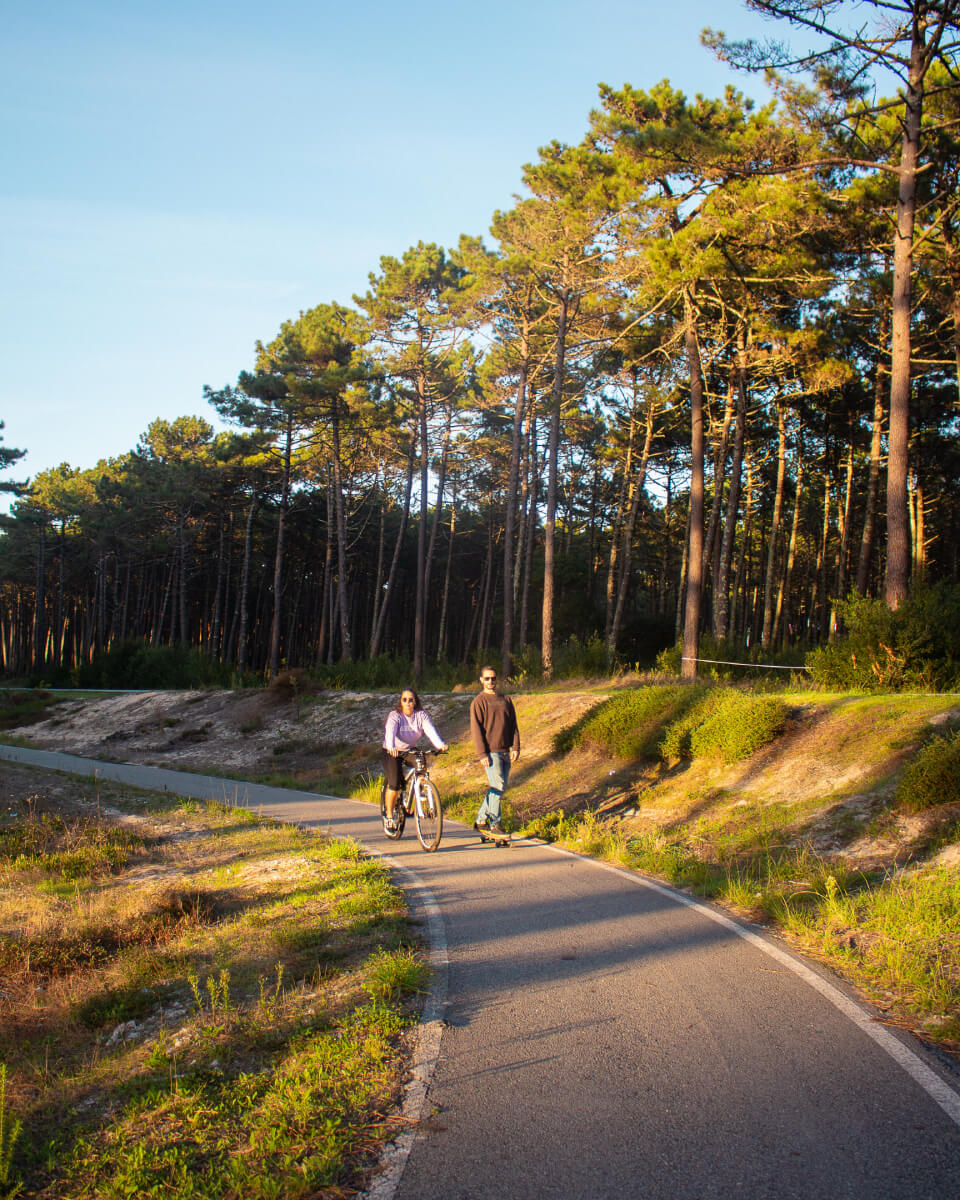
Located less than an hour from Porto by train, Esmoriz offers long uncrowded beaches, a relaxed surf culture, and coastal pine forests with a quieter rhythm than many of Portugal’s better-known beach destinations. Wooden walkways connect the dunes and natural areas, while small beachfront cafés and seafood restaurants create an easy, unhurried daily pace around the ocean.
Because many locals live here year-round while working or studying in Porto, the town keeps a more authentic and grounded atmosphere outside the summer season. The beach feels like a natural extension of everyday life, not a seasonal attraction.
A typical day might start with breakfast at a local bakery, followed by a surf lesson, a bike ride through the forest paths and Barrinha de Esmoriz, and end with a fresh seafood dinner at sunset.
Don’t miss:
- Surf lesson or free surf at the beach
- Breakfast at a local bakery
- Cycling through the coastal pine forest
- Barrinha de Esmoriz natural area
- Fresh fish and seafood at sunset
Monsaraz
Few places in Portugal feel as suspended in time as Monsaraz.
This small medieval village sits high above the Alentejo plain, its white houses and ancient walls looking out over Lake Alqueva – the largest artificial lake in Europe – and the vast, silent landscape stretching toward the Spanish border. From a distance, the village seems to grow directly out of the hillside, unchanged for centuries.
Inside the walls, there are only two main streets to explore. But that simplicity is exactly the point. The castle dates back to the 12th century. White houses with schist details line narrow cobbled lanes. Small restaurants serve traditional Alentejo food – bread soups, slow-cooked lamb, local wine – and the pace of life makes an afternoon feel genuinely restful.
The region around Monsaraz was also the first in the world to receive international recognition as a Dark Sky destination, making it one of the best places in Europe to observe the night sky. At the DarkSky Alqueva observatory, guided stargazing experiences are available throughout the year.
Monsaraz is best experienced slowly. One night inside the walls is enough to understand why so many travelers who visit once keep coming back.
Don’t miss:
- Walking the castle walls at sunset
- The Fresco Museum in the old courthouse
- A boat trip on Lake Alqueva
- Stargazing at DarkSky Alqueva
- Traditional Alentejo food and a local wine tasting
Porto Covo
Further south along the Alentejo coast, Porto Covo has quietly become one of Portugal’s most loved small towns.
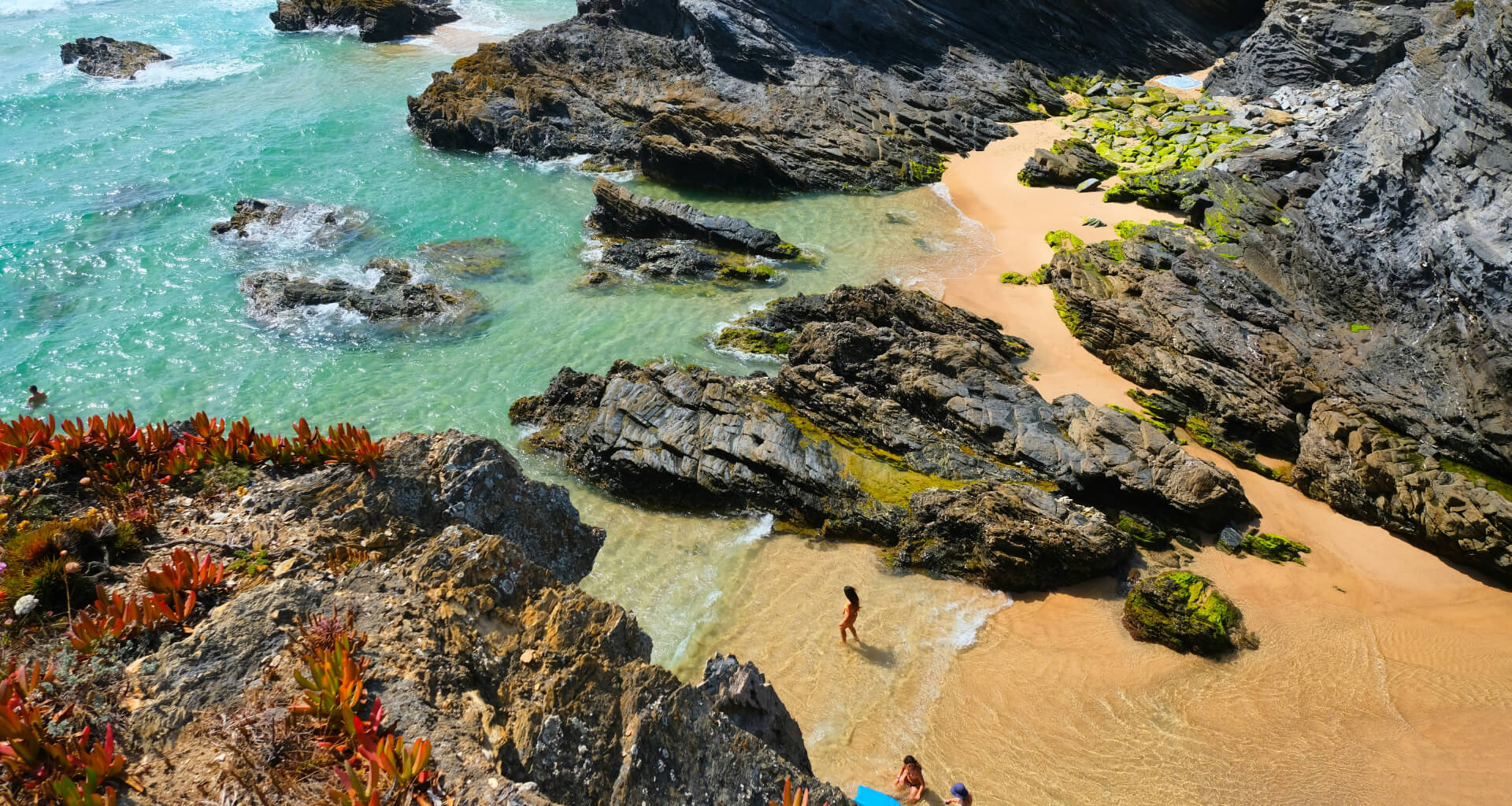
White houses, fishing boats, a quiet central square, and beaches hidden between Atlantic cliffs give the village a rhythm that feels entirely its own. Unlike many destinations along the Algarve coast, Porto Covo hasn’t been reshaped by mass tourism. Life here still revolves around the ocean, long lunches, and warm evenings spent outside.
The coastline around Porto Covo is part of the Vicentina Coast Natural Park, one of the most protected and unspoiled stretches of coastline in Western Europe. Trails connect the cliffs and hidden coves, and the beaches (some only reachable on foot) have a wildness that is increasingly difficult to find elsewhere along Portugal’s southern coast.
The village itself is small enough to explore in an afternoon. But most travelers who come for a day end up staying longer. It is that kind of place.
Don’t miss:
- Sunset from the village viewpoint over the Atlantic
- Exploring the coastal trails toward Ilha do Pessegueiro
- Fresh grilled fish and percebes at a local restaurant
- The natural pools along the cliffs
- An early morning walk to an empty beach
Tavira
In a region often associated with crowded resorts and package tourism, Tavira stands quietly apart.
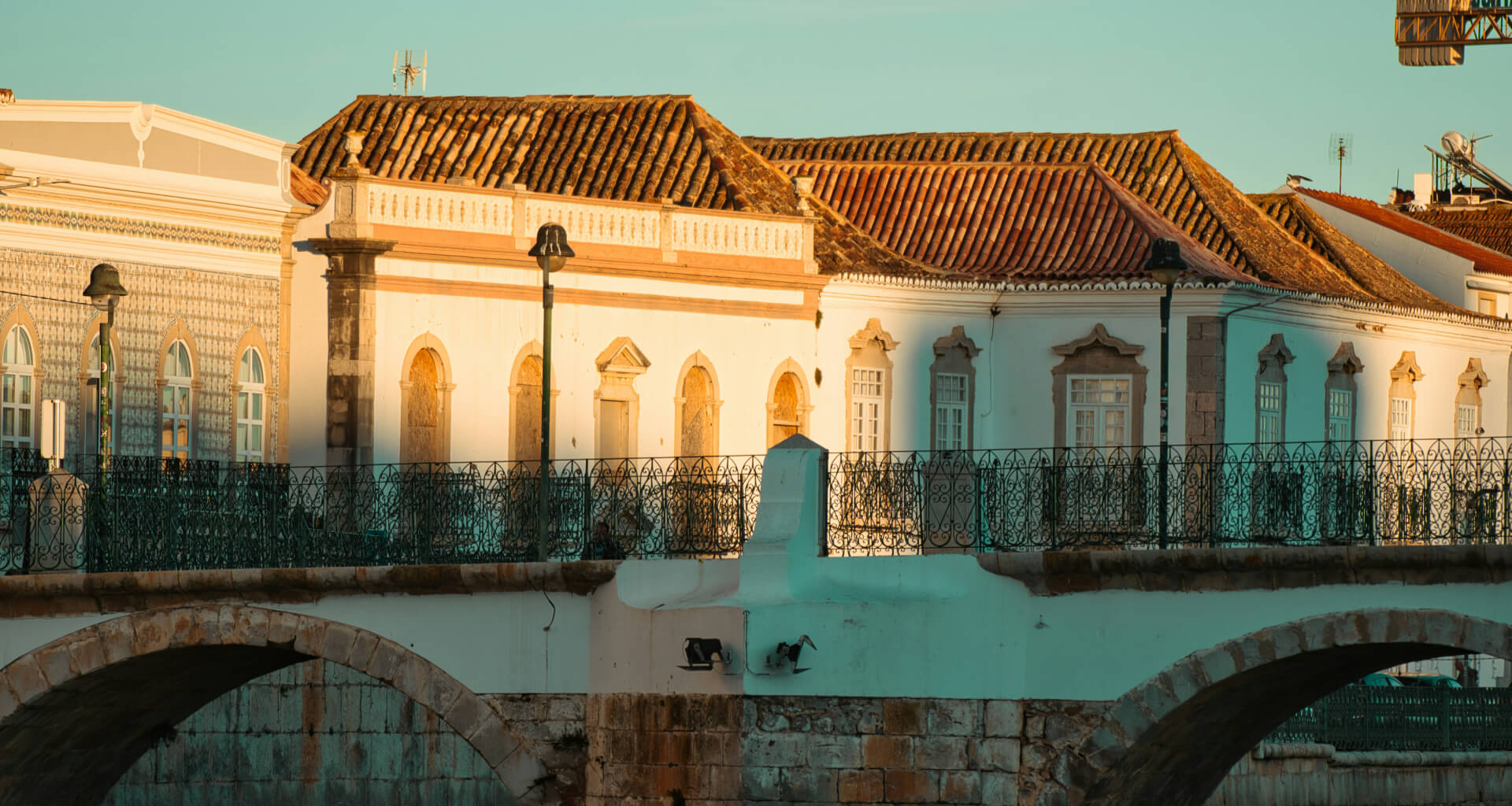
Located in the eastern Algarve, about 30 minutes from the Spanish border, Tavira is divided by the calm Gilão River and connected by a seven-arched Roman bridge that has stood at the heart of the town for centuries. Its streets are cobbled and narrow, lined with white houses featuring the distinctive four-slope rooftops and iron grilles of Arab architectural heritage. More than 30 churches are scattered across the town – earning it the nickname “the city of 37 churches” – and the Moorish castle above the rooftops offers some of the best views over the river and the surrounding landscape.
But what makes Tavira feel genuinely different from the rest of the Algarve is its pace. The central square fills with locals in the evening. The market is still used daily. The fishing quarter is still lived in. And the coastline -a series of barrier islands accessible only by boat, part of the Ria Formosa Natural Park – has remained unspoiled in a way that much of the Algarve has not.
Praia do Barril, reached by a short walk or the old narrow-gauge train that once served the tuna fishing community, is one of the most beautiful beaches in southern Portugal. And Santa Luzia, just a few minutes away, is famous for its octopus – a dish worth planning a lunch around.
Don’t miss:
- Walking across the Roman bridge at dusk
- The castle and its views over the town and river
- A boat trip to Ilha de Tavira
- Praia do Barril and the anchor cemetery
- Octopus lunch in Santa Luzia
A Different Side of Portugal
One of the biggest surprises for many travelers is how diverse Portugal becomes once you leave the main tourist routes.
Within relatively short distances, it’s possible to move between dramatic gorges, medieval villages, surf beaches, unspoiled coastline, and small towns where life still feels connected to the people who actually live there.
That’s part of the reason why so many travelers who initially came for Lisbon eventually start exploring smaller places instead. Not because Lisbon lost its charm, but because Portugal has so much more to offer, and most of it is still quietly waiting to be discovered.